Introduction:
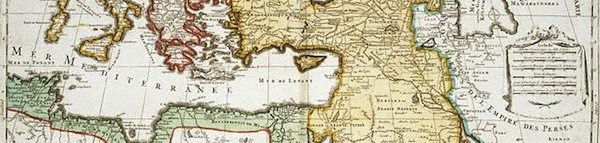
The Imaret is part of a larger complex called the Waqf. The imaret is a massive soup kitchen that would be placed in countries that the Ottoman empire would conquer, and would feed thousands of people on a daily basis. The specific one that I wrote about in the Imaret in Jerusalem was founded in the early 1550s but was not fully established until 1557. This imaret was established by Hurrem Sultan, the legal wife of Suliman the Magnificent (r. 1520-1566). In order for Hurrem Sultan to have complete control she had to have the deeds regarding the property in her name. She was able to do that and was able to oversee the whole creation and operations as well as being able to hire a manager to help oversee. Being able to have this amount of control meant she was able to bargain with the patriarchy. The legal system of the Ottoman empire was set up so that females could gain property through inheritance, dowries, or donations. It is also important to mention that when it came to inheritance, females would only get half the amount of inheritance as their male counterparts. This legal system automatically puts women at a disadvantage. Hurrem Sultan knew this and by executing her agency to bargain with the patriarchy she was able to gain financial security and proprietorship, as well as being able to control the inheritance and future of the imaret after she passes.
Photo’s:


Portion of essay:
The wife of Suleiman the Magnificent was known in Christen Europe as Rolexana, the most powerful woman in the Ottoman Empire during the 16th century”. Rolexana she is known in the Ottoman context, as Hurrem Sultan, was the Russian slave concubine of Suliman the Magnificent for fifteen years before the wedding took place in 1536. Hurrem, like all concubines, was neither Turkish nor Muslim by birth. She was abducted from her homeland at a young age and yet through proving herself as adaptable, quick-witted, being able to navigate politics, all the while having grace, she was able to get herself out of the low status of a concubine and become a sultana, the wife of a sultan. The material object that is the center of this essay is the imaret, an imperial soup kitchen, which is set in Jerusalem and located within one of the waqfs that she established. This imperial soup kitchen was operating in the holy city of Jerusalem in the early 1550s but was not fully established until 1157. Hurrem Sultan being a sultana meant that she had access to certain privileges such as endowments and funds. The problem is that women within the Ottoman empire had to deal with inheritance law and the discrimination that this law had towards women. The bulk of a women’s property, regardless of what they used it for, “came to women through dowry, gifts, and stipends’ ‘ which are limitations that are out of the recipient’s control. The inheritance law still favored males according to sharia law, “daughters receive only half of the inheritance given to sons in the same family”. Hurrem was aware that the Ottoman imperial beneficence was clearly set up to benefit men more than women. With this information, I argue that Hurrem knew all of the legal confines that made it harder for women to have their own economic security and bargained with the patriarchy to get the property to secure the legal and financial benefits that came with owning property. This paper specifically focuses on the single imaret in Jerusalem, established by Hurrem Sultan, which was a direct result of her bargaining with the patriarchy to provide herself more security and freedom. She single-handedly could not change the law so she worked within the framework to give herself the best protection possible by having the imaret be in her name. Hurrem was not the only woman who created a waqf as, “…other women like Haseki’s, Valide Sultan, and Ottoman princess” also created their own waqf from the second half of the sixteenth century through the end of the eighteenth century”. Her waqf being located in Jerusalem was unique because Jerusalem was already consolidated by Suliman the Magnificent, and this city along with other holiest sites “doubled the size of the empire…and placed the Ottomans in control of the holiest sites of Islam.”
In Islamic traditions, providing charity was an obligation. During conquering new lands the rulers of the Ottoman empire would look over the basic needs of that population and these actions would be viewed as charity. Waqfs, a pious endowment organized within the context of Muslim law and society, was what held the imaret. Waqfs and the imaret in Jerusalem were used to gain legitimacy and status within this holy city through these charitable donations. The imaret was a key aspect that the Ottomans used within Jerusalem to gain legitimacy as the food was considered the main way to execute and maintain power Being able to provide a place to get food allowed the citizens of the conquered land to start to see how the Ottoman empire could benefit the city of Jerusalem. Before Hurrem could do anything regarding the imaret within Jerusalem she had to wait for “the documents that recorded the transfer of property from the Sultan to his consort”. The specific deed that she got for Jerusalem consisted of “ a deed to the freehold of the property, that Suliman presented to his wife Hurrem, and included agricultural lands and buildings in Southern Syria districts of Jerusalem”. The changing of names on the deeds was important because Hurrem could not endow any properties, nor execute any administrative control, until she had received the full title from her husband, Suliman the Magnificent. Between the years of 1550, which is when the imaret started, and 1557 Hurrem gained “ten titled deeds for specific properties to herself,” which also contained the expected revenues for each property. We can assume that the expected revenue within the deeds only added as further incentive for Hurrem to actually get the deeds in her name. Even with these several deeds, she had limitations because of Islamic law. She could not do whatever she wanted for the imaret. Hurrem’s first obligation was always to the empire. Instead, she had to make the imaret fit the “expectations of the subject population and the symbolic and practical needs of the dynasty”. Even with the obligation to the empire and remaining within the legal parameters set by Islamic law we can start to see how Hurrem was starting to gain power and control once the deeds came through in her name. She established her presence in Jerusalem by establishing this imaret, and this marked the long reach of her power and beneficence. It is important to note that Hurrem did not pick the city of Jerusalem herself as the location to set up the imaret. Jerusalem was considered to be a unique holy city because of its religious importance. Jerusalem “was the principal destination for Jews and Christens making pilgrimages and a second stop for Muslims…”The tourism that this city brought helps explain why Hurrem Sultan made the imaret, as it was a partial response to the city’s need to feed all of these people while simultaneously fulfilling the sultan’s obligation to provide for the lands that they conquered. The imaret was a huge soup kitchen that was part of a waqf that included a mosque, a dwelling house with fifty-five rooms for the use of the Muslim pilgrims, and a khan for wayfarers. The imaret “was the center of this complex, that was to provide daily food and bread for the poor and the needy among the Muslim population of Jerusalem.”. As the founder of the imaret Hurrem was responsible for several hundred people getting fed on a daily basis. It is important to emphasize the fact that in order for this imaret to be a huge success the planning of the operations had to be firmly established. This soup kitchen was already strategically planned out in the waqfiyya, which is the deed where the waqfs are written about. The portions of the deeds regarding how the imaret operated consisted of “precise directions for the preparation and distribution of food… and an indication of what was typical and basic dishes, and the appropriate distinction among people of different classes” While I could not find a source confirming that it was Hurrem herself who made these specific directions and distinctions I can assume that this section helped her be able to execute power and control more easily with it being laid out in the deed’s before the actual imaret was erected and serving people.
While Hurrem Sultan’s imaret did fulfill the charitable need that is required for Muslims, especially royal Muslims, this action also benefited her by giving her proprietor control and therefore legal security. Hurrem’s involvement in the imaret obviously served the empire, yet it is her intense involvement with the imaret that shows how she was able to gain financial security for herself and her heirs. Hurrem kept “administrative control.. And had the ability to appoint a manager”, which enabled her to have total control over the day-to-day running of the imaret. Hurrem having the authority to select her own manager implies that whomever she selected would be a person who would work to help her maintain, if not further, her control over the properties. Through her administrative control, she could dictate how the imaret operated on a macro and micro level and could make the changes that she wanted because she had the deed in her name. She could change or shift the imaret is whatever way she thought would be best for her in the long run. She was doing all of this while overseeing the imaret in ‘the name of the empire’.
Hurrem Sultan is a great example of shattering glass ceilings and using all the tools within her realm to get herself the best protection while living in a patriarchal society that still did not see women as equals or deserving of men. She gained herself the highest status a woman could gain by becoming sultana, and then she used the close proximity to the sultan to override the patriarchy and get deeds for several properties that would give her the ability to gain economic independence, legal proprietorship, and allow her to pass these properties and their economic revenue down to her own heirs.
Bibliography:
Memis, Serife E. “Benefactresses of Waqf and Good Deeds Charitable Women in Ottoman Jerusalem, 1703–1831.” Jerusalem Quarterly, (2015): 48-58. Accessed November 10, 2022.https://www.palestine-studies.org/sites/default/files/jq-articles/Pages_from_JQ_72_-_Memis_0.pdf
Peri, Oded. “Waqf and Ottoman Welfare Policy. The Poor Kitchen of Hasseki Sultan in Eighteenth-Century Jerusalem.” Journal of the Economic and Social History of the Orient 35, no. 2 (1992): 167–86. https://doi.org/10.2307/3632408.
Peirce, Leslie P. Empress of the East: How a Slave Girl Became Queen of the Ottoman Empire. London: Icon, 2020.
Singer, Amy. Constructing Ottoman Beneficence an Imperial Soup Kitchen in Jerusalem. Albany: State University of New York Press, 2002.
Singer, Amy. “The Mülknāmes of Hürrem Sultan’s Waqf in Jerusalem.” Muqarnas 14 (1997): 96–102. https://doi.org/10.2307/1523238
Notes:
- Singer, Constructing Ottoman Beneficence, 4
- Pierce, Empress of the East, 3
- Singer, Constructing Ottoman Beneficence, 94
- Memis, Benefactress of Waqf and Good Deeds, 49
- Singer, Constructing Ottoman Beneficence, 36-37
- Pierce, Empress of the East, 137
- Singer, Constructing Ottoman Beneficence, 25
- Singer, Constructing Ottoman Beneficence, 214
- Singer, The Mülknāmes of Hürrem Sultan’s Waqf in Jerusalem, 14
- Singer, Constructing Ottoman Beneficence, 44
- Singer, Constructing Ottoman Beneficence, 161
- Singer, Constructing Ottoman Beneficence, 36-37
- Peri, Waqf and Ottoman Welfare Policy, 170
- Singer, Constructing Ottoman Beneficence, 58
- Singer, Constructing Ottoman Beneficence, 58
- Singer, Constructing Ottoman Beneficence, 90
- Singer, Constructing Ottoman Beneficence, 95
- Peirce, Empress of the East, 7
- Singer, Constructing Ottoman Beneficence, 97
- Singer, Constructing Ottoman Beneficence, 4

