By Faith Haines
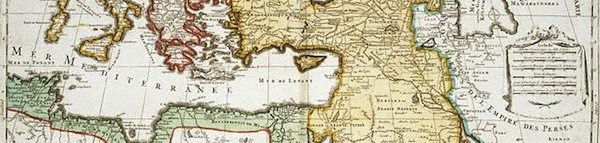
For centuries the Ottoman Empire exercised its military power that included cavalry units of trained mounted archers. While archery eventually fell out of favor in comparison to developing gunpowder technology, it left a lasting impact of cultural significance. The significance of thumb ring artifacts from Ottoman archers illustrate the important status that archery held in Ottoman culture that ranged from religious importance and status implications. While archery eventually fell out of favor on the battlefield, archery remained a significant sport.
Archer’s Ring & Thumb Release
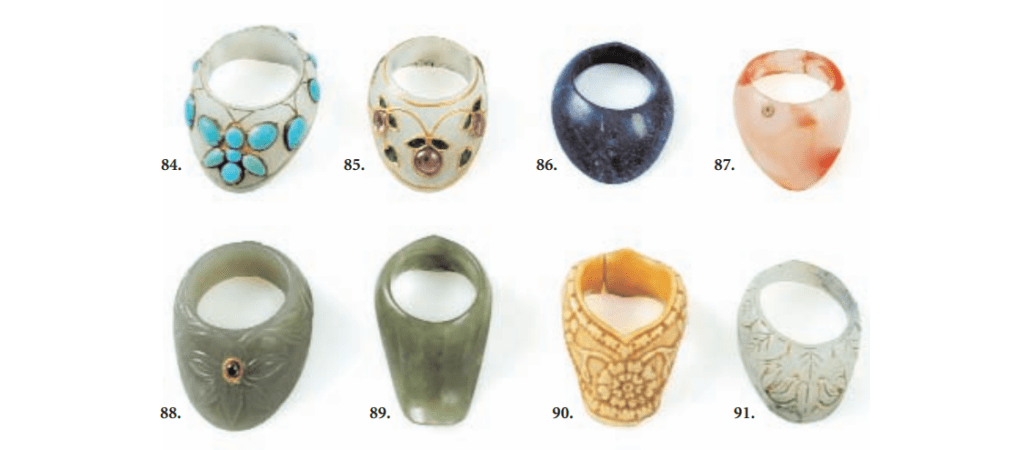
The archer’s thumb ring, or zighir, was utilized by Ottoman archers to protect the thumb knuckle when employing the thumb release technique to draw the bow string. Thumb rings were protective gear that helped prevent abrasion from the pressure of the bow string during the draw and release. The thumb release technique is distinct form of drawing the arrow back in which the arrow sits in the curve of the hand between the thumb and forefinger. The curved lip of the thumb ring allowed for more stability, accuracy, and quickness when drawing and releasing the bow string (Grayson 2007, 8-9).
The construction of the thumb ring was a very intricate process because each ring was made specifically for the wearer and had to fit perfectly to perform well in battle. To achieve a perfect fit, softened wax was utilized to create a model of the thumb of the specific wearer. This was a process of trial and error requiring the archer to test the feel of the ring. A ring with a lip that is too long could interfere with the accuracy of the arrow and a ring that is too tight could cut off circulation. (Klopsteg 1987 69-70).
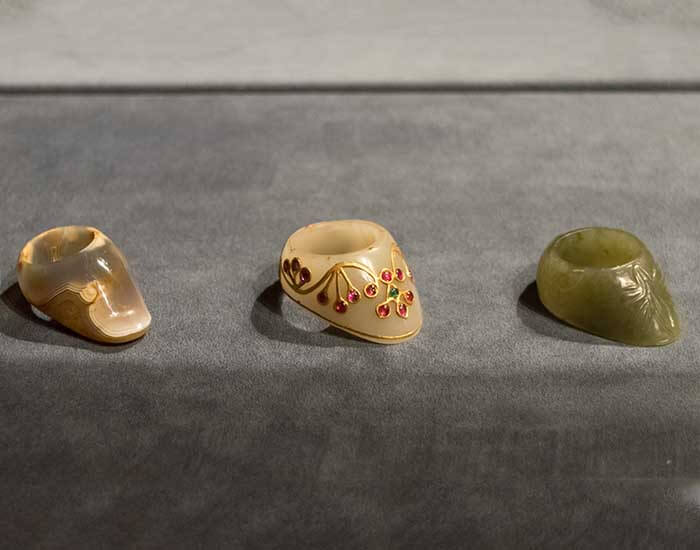
The meticulous process of crafting an archer’s thumb ring did not stop at the fitting stage. Thumb rings were works of art. Thumb rings were made of “gold, silver, jasper, ivory, and horn of many kinds” (Klopsteg 1987, 68). Rings had intricate designs and inlays, some rings were made from precious stones such as pink and green tourmaline, turquoise, lapis lazuli, agate, and white, green, and nephrite jade (Grayson 2007, 94-96). Grayson explains that “the craftmanship of archery equipment was highly esteemed.” Pertaining to archer’s rings, “the more ornate examples were worn as adornment or as marks of status” (Grayson 2007, 59).
Religious Implications
The intricacy and craftmanship of an archer’s ring also had religious implications. According to Klopsteg, “the makers of thumb rings comprised a guild whose pir was Ali b. abi Talib, who, in accordance with the admonition of the hadith, taught his sons Hasan and Husein the art of archery” (Klopsteg 1987, 67). Ali b. abi Talib “on the command of the Prophet … invented the thumb ring” (Klopsteg 1987, 67-68). The command of the Prophet stretches back to one tradition where beginning with Adam, prophets practiced archery. This practice never ended up until Mohammed. According to the Quran, God “commanded Mohammed that bows and arrows were to be used. The Prophet, together with his associates, gave sanction in both word and deed to the art of bow shooting” (Klopsteg 1987, 13).
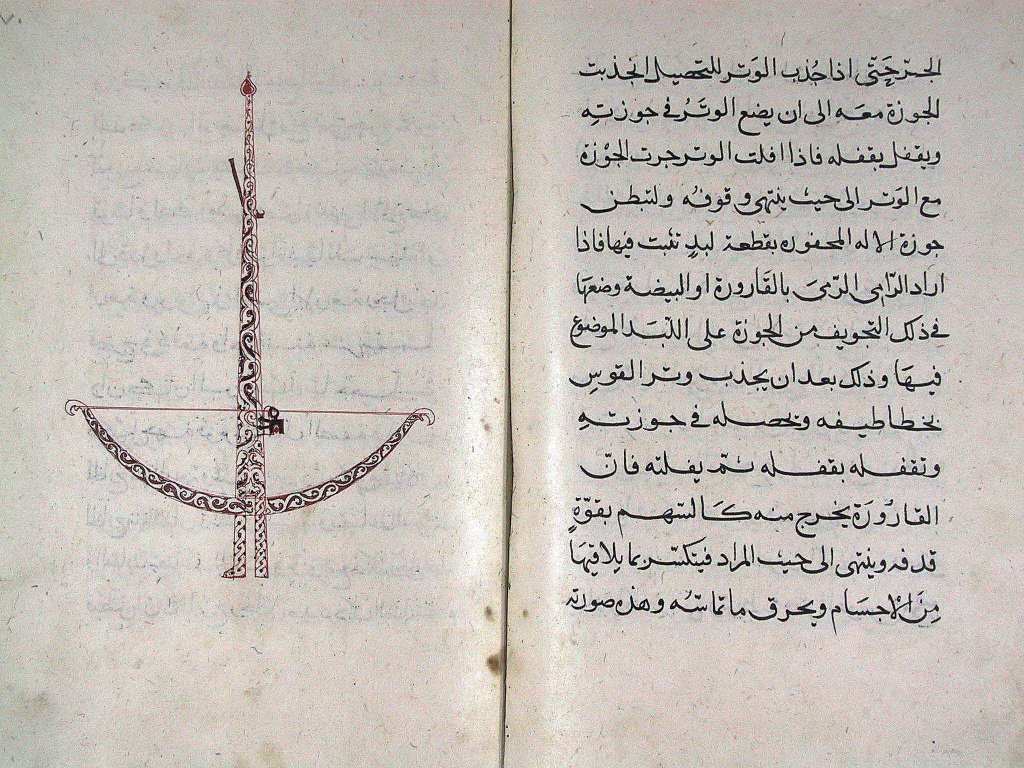
The reverence and religious implications of archery explain why when Sultan Mahmud I (r. 1730-1754) revived archery, he was praised for having revived a religious custom as well. This revival was considered meritorious because “to do so was ‘the greatest glory in the eyes of the believers, and those rulers are extolled and their piety is to be praised who have given renewed life to the practices of those who lives in earlier times.’” Archery also possessed a ceremonial nature regarding religion in which ceremony and prayers were performed. According to Klopsteg, in materials utilized to craft archer’s rings, “ivory is a permissible material and does not interdict the saying of prayers when carried in the pocket” (Klopsteg 1987, 12 and 68).
Özveri and Visser explain how the Quran references archery as well. According to Özveri and Visser, there are “50 Hadiths (a saying, an act or tacit approval or disapproval ascribed to the prophet Muhammad) in which people are encouraged to practise archery, which is put on a par with worship.” Özveri and Visser follow this claim with three examples. One verse, “the one who makes the arrow, the one who presents the arrow, and the one who shoots the arrow are destined for paradise,” as well as “teach your children to read the Koran and arrow shooting” and “arrow shooting is better than the act of worship to no purpose” (Özveri and Visser 2013, 18).
Sultans & Archery
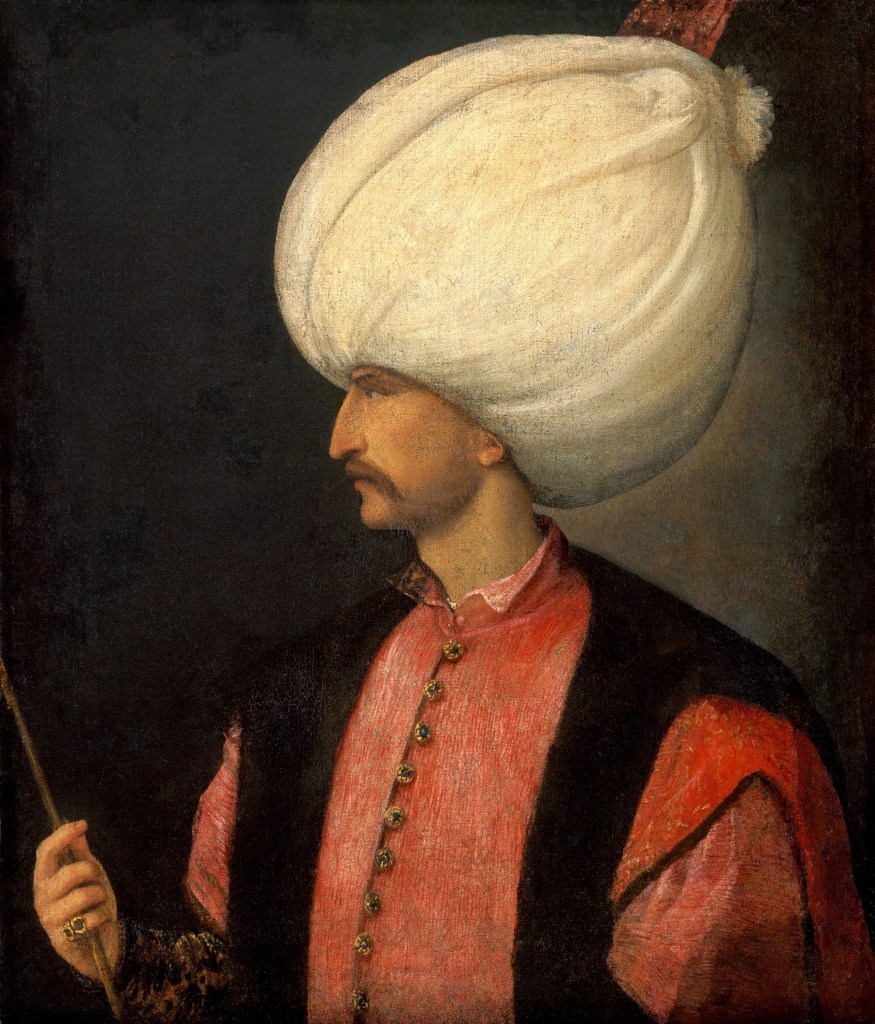
The Islamic cultural emphasis on archery made archery a prestigious and revered practice. The intricacy and use of thumb rings as decoration and status markers illustrate both the religious and cultural emphasis on archery. The prestige of archery is reflected in the concept of archery as “a part of lifestyle of an educated person, it was the main activity of most of the reigning Ottoman Sultans. The Ottoman Sultans are the founders, protectors, and supporters of the archer corporation” (Bir et al. 2015, 436). The dedication of the sultans is also illustrative of the importance of archery.
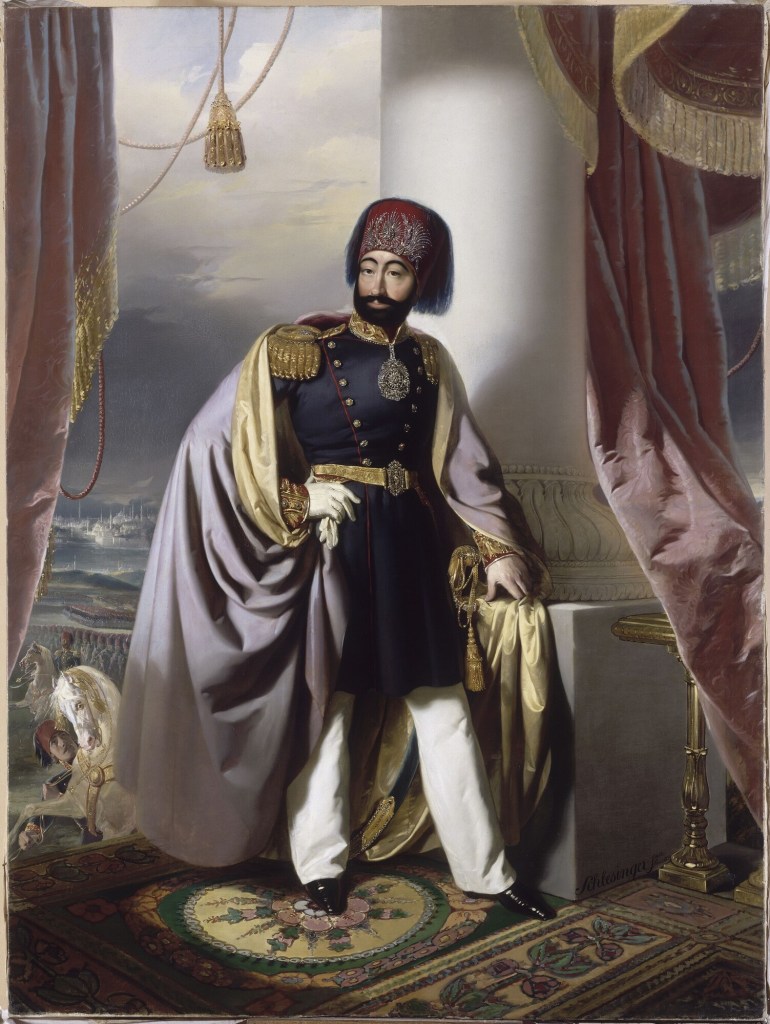
Turkish archery reached its zenith during the years from 1451-1566, which covered the reigns from Mehmed II (r. 1451-1481) to Suleiman the Magnificent (r. 1520-1566). Murad IV (r. 1623-1640) is one of the most noted archer-sultans and his festival parades included the participation of arrow makers, the guilds of bowyers, archers, archery instructors, and thumb ring makers (Klopsteg 1987, 10). Suleiman the Magnificent also utilized archery in his festivals such as the festival dedicated to the appointment of Ibrahim as Grand Vizir where archery was part of the events that occurred in the arena (Lamb 1951, 86). Following the conquest of Constantinople, Sultan Mehmed II ordered the creation of the Okmeydani, which would become the shooting ground of Istanbul (Bir et al. 2015, 437). The final revival of archery by a sultan occurred under the nineteenth century Sultan Mahmud II (r. 1808-1839) (Klopsteg 1987, 10).
Composite Reflex Bows
The use of composite reflex bows required archers’ rings in Islamic history. Composite bows are made of several materials and the most classic form is the “Asiatic composite bow consisting of a wood core with sinew glued to the back (the tension side) and the horn applied to the belly (the compression side).” The multiple-material composition of the bow is important because the “combination of flexible materials allows for short, powerful limbs capable of transferring energy more efficiently than those of other bow types.” The powerful nature of the recurve bow was suited to horseback warfare where the bow allowed for speed and distance with minimally weighted arrows (Grayson 2007, 3 and 59).
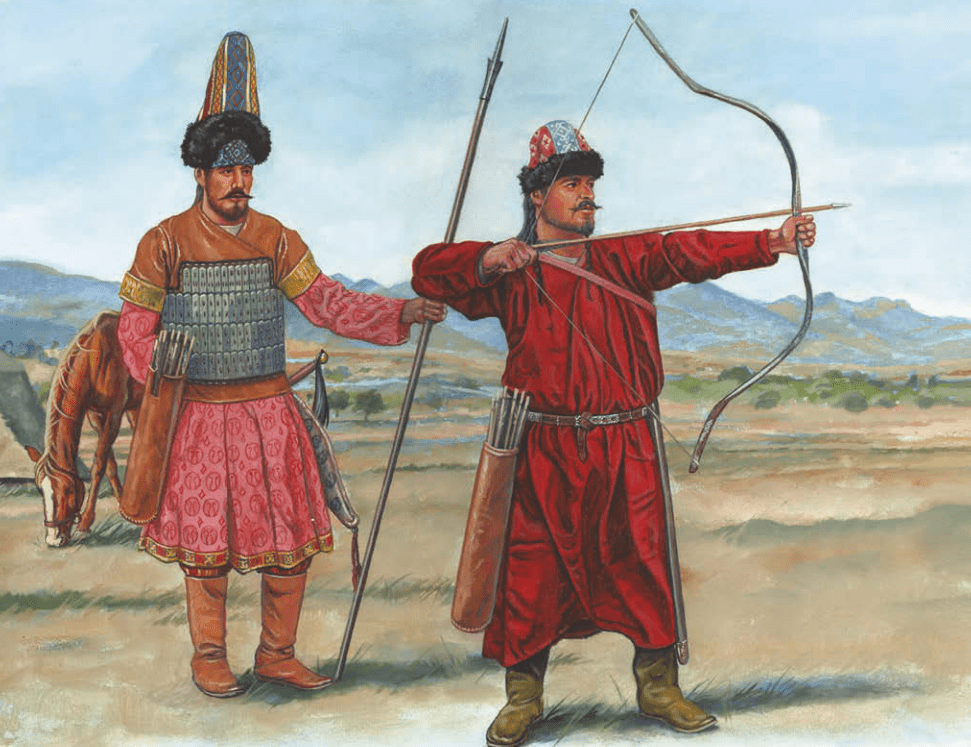
Ottoman bows are called reflex bows because the limbs of an unstrung bow bend in the opposite direction. The recurve ends are pulled back by the bow string and allow for more energy and a stronger, faster release. The bow is made of three materials to harness energy storage including: a wood body at the middle of the bow, a sheet of ox horn inside the bow, and a sheet of ox sinew (tendon) outside of the bow. The recurved nature of the bow also made for a shorter draw required by the archer. According to Bir, “Ottoman arrows are the shortest known used by any society.” These arrows “were also slender (0,7 m) and this made them light (10-18 g), so they remained in the air longer and traveled extremely long distances” (Bir et al. 2015, 449-450). Therefore, not only did the recurve bows allow for more energy storage, the short arrows required for the recurved bow also allowed for farther travel of the arrow.
Introduction to Gunpowder
When gunpowder was first introduced on the battlefield, the Ottomans continued to utilize mounted archers as opposed to guns. The range of the Ottoman recurved bow was 280 yards, whereas the muskets of the eighteenth century had an effective range of 80 yards and only 50 percent of those shots hit the target. Ottoman composite bows also had a higher rate of firing compared to muskets (nine to ten shots per minute against one musket shot per 2-3 minutes). Additionally, “a well-trained archer had an effective range of up to 300 m while a musketeer could not hit a target effectively further than 70 m” (Roy 2014, 70).
Technological Shift
By the eighteenth-century, Islamic armies had begun to shift towards gunpowder as weapons became more accurate and easier to acquire. Advancing gunpowder technology also meant a decline in horse archery due to the intense training required to become an accurate archer and the short training required to shoot a musket (Roy 2014, 62). However, while archery fell out of favor on the technologically advancing battlefield, archery remained an important sport recreationally in Ottoman culture.
Archery as a Sport
The Ottoman Archer Corporation is one of the earliest sports clubs in history (Bir et al. 2014, 436). Islamic archers participated in sport archery as well as distance archery (Grayson 2007, 61). After the conquest of Constantinople, Sultan Mehmed II (r. 1451-1481) established the shooting ground of Istanbul named Okmeydani as an independent foundation. Royal edicts illustrate how Mehmed intended for the shooting ground to be utilized by soldiers as well as members of the public. Mass prayers could also be held at the shooting ground in times of war (Bir et al. 2014, 437). The establishment and intention of the shooting ground by Mehmed also informs us that archery was practiced recreationally as a sport as far back at the fifteenth century.
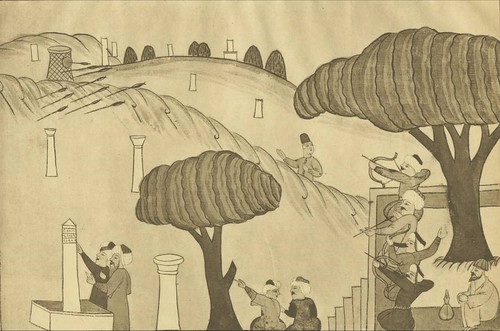
From the establishment of the shooting ground in Istanbul by Mehmed II (r. 1451-1481) to Mahmud II (r. 1808-1839) reviving interest in archery during his reign from 1808 to 1839, archery remained an important sport. Mahmud II “participated in the regular tournament matches and established prizes as incentives to the archers to increase their skill” (Klopsteg 1987, 10-11). According to Bir, “the dream of every archer was to achieve a record breaking shot that would be commemorated by a stone pillar” at the shooting ground in Istanbul established by Mehmed. These commemoration stones or target stones were large marble pillars that held inscriptions such as the name and date of the archer. Stones of importance like those erected by sultans acted as monuments and were decorative works of art that could include poetry. Nineteenth century Sultan Mahmud II was “one of the greatest archers in the history of Turkish archery.” Mahmud II had multiple target stones that were created in his name from record breaking shots. Not only did Mahmud II participate in archery tournaments, but he also established the rules for archery competitions where he also participated (Bir et al. 2014, 437-444).
The Significance of Archery
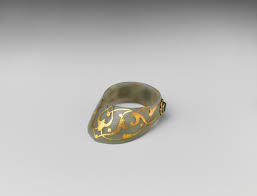
Archer’s thumb rings are an imperative artifact in understanding the significance of archery in Ottoman culture. Thumb rings illustrate the unique thumb release technique honed by Islamic archers that allowed for speed and power when releasing arrows. However, thumb rings also convey the legacy of archery. Rings were outlined in gold and held intricate carvings and semi-precious stones. Archer’s thumb rings were even used as decoration to signify status and accomplishment. Even when archery fell out of favor on the battlefield due to advancing military technology, archery remained a significant sport as seen through the achievements in archery by Sultan Mahmud II (r. 1808-1839) in the nineteenth century. Archery holds an important place in Ottoman history and the archer’s thumb ring serves as a visual artifact indicative of archery’s lasting significance.
References
Bir, Atilla, Mustafa Kaçar, and Şinasi Acar. “Ottoman Distance Archery, Bows and Arrows.” Archives Internationales d’Histoire des Sciences 55, no. 155 (2015): 435–57. https://doi.org/10.1484/j.arihs.5.101639.
Grayson, Charles E., Mary French, and Michael J. O’Brien. 2007. Traditional Archery From Six Continents : The Charles E. Grayson Collection. Columbia: University of Missouri Press. https://search.ebscohost.com/login.aspx?direct=true&db=e025xna&AN=235240&site=eds-live.
Klopsteg, Paul Ernest. “Turkish Archery and the Composite Bow : A Review of an Old Chapter in the Chronicles of Archery and a Modern Interpretation.” Internet Archive. Manchester : Simon Archery Foundation, 1987. https://archive.org/details/turkisharcheryco0000klop/page/14/mode/2up.
Lamb, Harold. 1951. Suleiman the Magnificent: Sultan of the East. 1st ed. Doubleday. https://search-ebscohost-com.proxy-sm.researchport.umd.edu/login.aspx?direct=true&db=cat01481a&AN=stmrys.000169425&site=eds-live.
Özveri, Murat, and Nils Visser. “‘Arrows, Arrows, Everywhere!’: Technological Advantages of the Seljuq Armies.” Medieval Warfare 3, no. 3 (2013): 17–21. https://www.jstor.org/stable/48578235.
Roy, Kaushik. 2014. Military Transition in Early Modern Asia, 1400-1750 : Cavalry, Guns, Government and Ships. Bloomsbury Studies in Military History. London: Bloomsbury Academic. https://search-ebscohost-com.proxy-sm.researchport.umd.edu/login.aspx?direct=true&db=e025xna&AN=762543&site=eds-live.
 Objects of the Ottoman Empire