Hurrem Sultan’s Imaret in Jerusalem

Introduction:  The Imaret is part of a larger complex called the Waqf. The imaret is a massive soup kitchen that would be placed in countries that the Ottoman empire would conquer, and would feed thousands of people on a daily basis. The specific one that I wrote about in the Imaret in Jerusalem was founded in the early 1550s but was not fully established until … Continue reading Hurrem Sultan’s Imaret in Jerusalem

Suakin: An Ottoman Port in the Red Sea

Aerial view of the city’s ruin Before Ottoman Occupation Located in Northeastern Sudan, Suakin was a trading hub at the Red Sea connecting Africa, the middle east and even as far as India even before Ottoman occupation. Early Arabic sources from the tenth-century indicate it was a port inhabited by the local Beja people who facilitated trade in the red sea, and was also a … Continue reading Suakin: An Ottoman Port in the Red Sea

Archer’s Thumb Ring

By Faith Haines For centuries the Ottoman Empire exercised its military power that included cavalry units of trained mounted archers. While archery eventually fell out of favor in comparison to developing gunpowder technology, it left a lasting impact of cultural significance. The significance of thumb ring artifacts from Ottoman archers illustrate the important status that archery held in Ottoman culture that ranged from religious importance … Continue reading Archer’s Thumb Ring

The Alhambra: Remembering al-Andalus

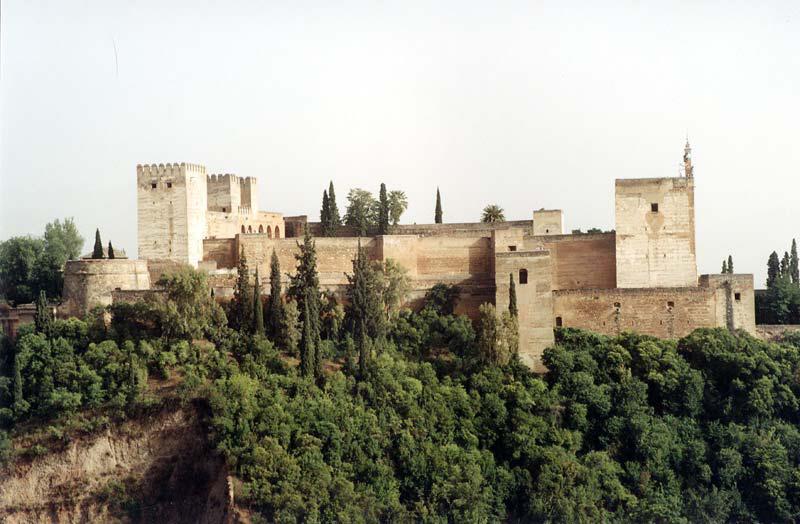
The Alhambra, meaning “the Red One” in Arabic, is a palace/fortress complex in modern day Granada, Spain. Built upon a large hill and designed foremost as a defensive structure, the facility was gradually expanded into an ornate palace complex which served as the seat of power for the Nasrid dynasty, the rulers of the kingdom of Granada. In addition to housing the sultan and his … Continue reading The Alhambra: Remembering al-Andalus

About the FA 22 Class

This website was created as part of a class project at St. Mary’s College of Maryland. The class is Islamic Empires: Podcasting the Ottomans, (HIST 314), and is taught by Dr. Betül Başaran. Ashlie H. I’m a senior at St. Mary’s College of Maryland. I’m majoring in religious studies and art. I’m a Wiccan Adept at the Circle of the Silver Raven, where I teach classes. … Continue reading About the FA 22 Class

غايةالحكيم: Arabic Occult Manuscript

By: Ashlie Hardman About The Picatrix, an astronomical occult, manuscript, was believed to have originated in Europe. However, as older copies of the manuscript have been discovered, its origin story has evolved. The oldest known version of this manuscript is thought to have been created in the 10th or 11th century in Arabic. It was called Ghāyat al-Ḥakīm ( غايةالحكيم ). The english translation is … Continue reading غايةالحكيم: Arabic Occult Manuscript

The History of Incense and Incense Burners in Islamic History

The Pre-Islamic Era Before Islam had even developed incense was an important part of life in Arabia due to the cultivation of aromatics, such as frankincense and myrrh. This was a huge source of profit for the region. But, surprisingly, these aromatics were not preferred by royalty and the elite. They actually preferred musk, aloeswood, and ambergris, which were imported scents. Furthermore, incense was used … Continue reading The History of Incense and Incense Burners in Islamic History

The Dardanelles Gun

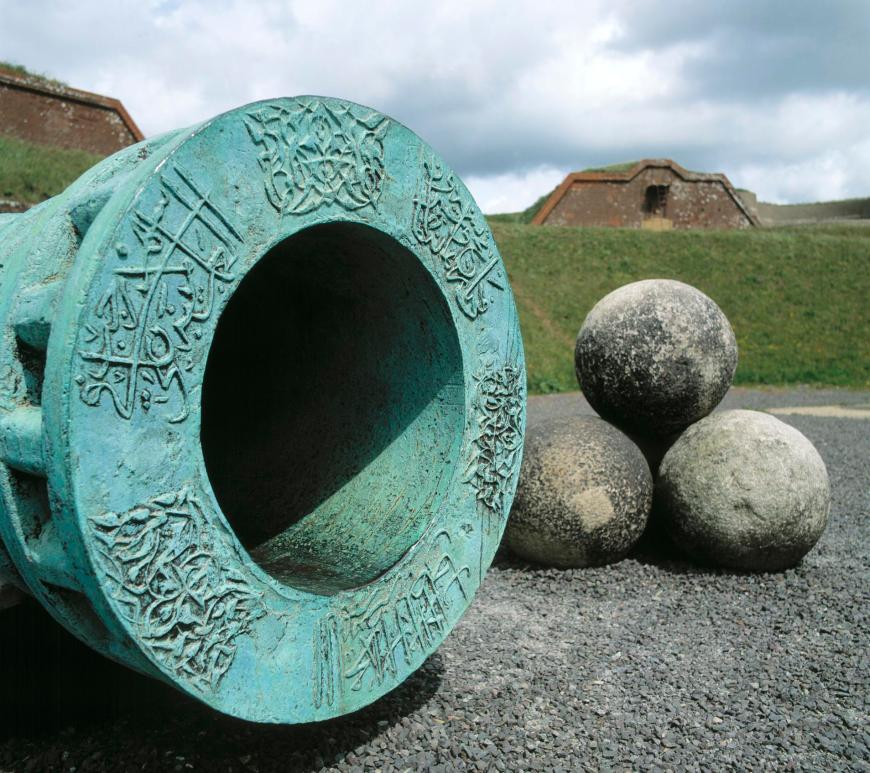
Felix Beuker The Dardanelles gun is one of the few remaining examples of an Ottoman Bombard. These giant bronze guns were the height of weapons technology when they were cast and were crucial in many of the Ottoman’s conquests. Perhaps the most famous of all of these conquests is the fall of Constantinople in 1453, wherein several giant bombards were instrumental in knocking down the … Continue reading The Dardanelles Gun

Sultan Suleyman I’s Papal Crown

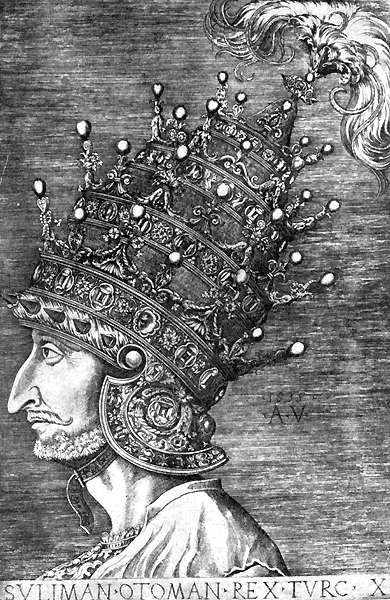
By: Mal Cianfrani Introduction Sultan Suleyman I, who reigned from 1520-1566, commissioned the creation of an elaborate crown from Venetian artisans. This crown is a prime example of the intentional hybridity that the Ottoman Empire participated in, specifically during Suleyman’s reign. The Sultan was a known patron of Western artisans during his early reign and understood that in order to have as much power as … Continue reading Sultan Suleyman I’s Papal Crown