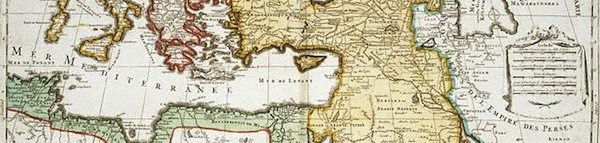
The Pre-Islamic Era
Before Islam had even developed incense was an important part of life in Arabia due to the cultivation of aromatics, such as frankincense and myrrh. This was a huge source of profit for the region. But, surprisingly, these aromatics were not preferred by royalty and the elite. They actually preferred musk, aloeswood, and ambergris, which were imported scents. Furthermore, incense was used for religious purposes by Pagan and Christian worshippers. It was in this environment that Islam grew, therefore it easy to see how incense and aromatics also made their way into the development of Islam as well
Religious Context
The Sahih Muslim collection and the Sahih al Bukhari collection of the Hadith frequently refer to pleasant fragrances when describing good things. Pleasant smells are attributed to the afterlife and the souls of believers are also said to have pleasant smells. This would explain why Muslims began using incense in mausoleums. Furthermore, Muhammad himself advocated for a pleasant smelling worship place which is also seen in the Hadith. After seeing someone spit near the direction of Mecca, the qibla, Muhammad cleaned the mucus and added something sweet smelling to the area, this tradition is said to explain why pleasant fragrance should be in the mosque
Early Islamic History
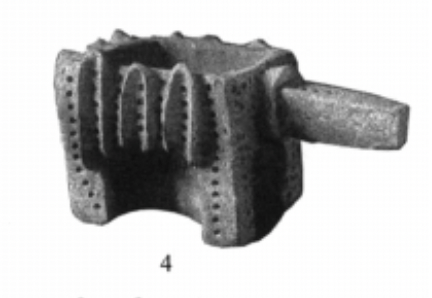
Incense continued to be favored by Muslim elite. It was commonly used as perfume. For example, some Caliphs would require to people use incense to perfume themselves before they were introduced to him. Many Muslims also adopted the tradition of placing incense in mausoleums. There were generally two types of incense burners, those produced from pottery and those produced from soft-stone. The rectangular shape was the most common among the pottery produced burners. The photo below shows what the most common pottery based incense burner looked like between the sixth and the middle of the eight centuries
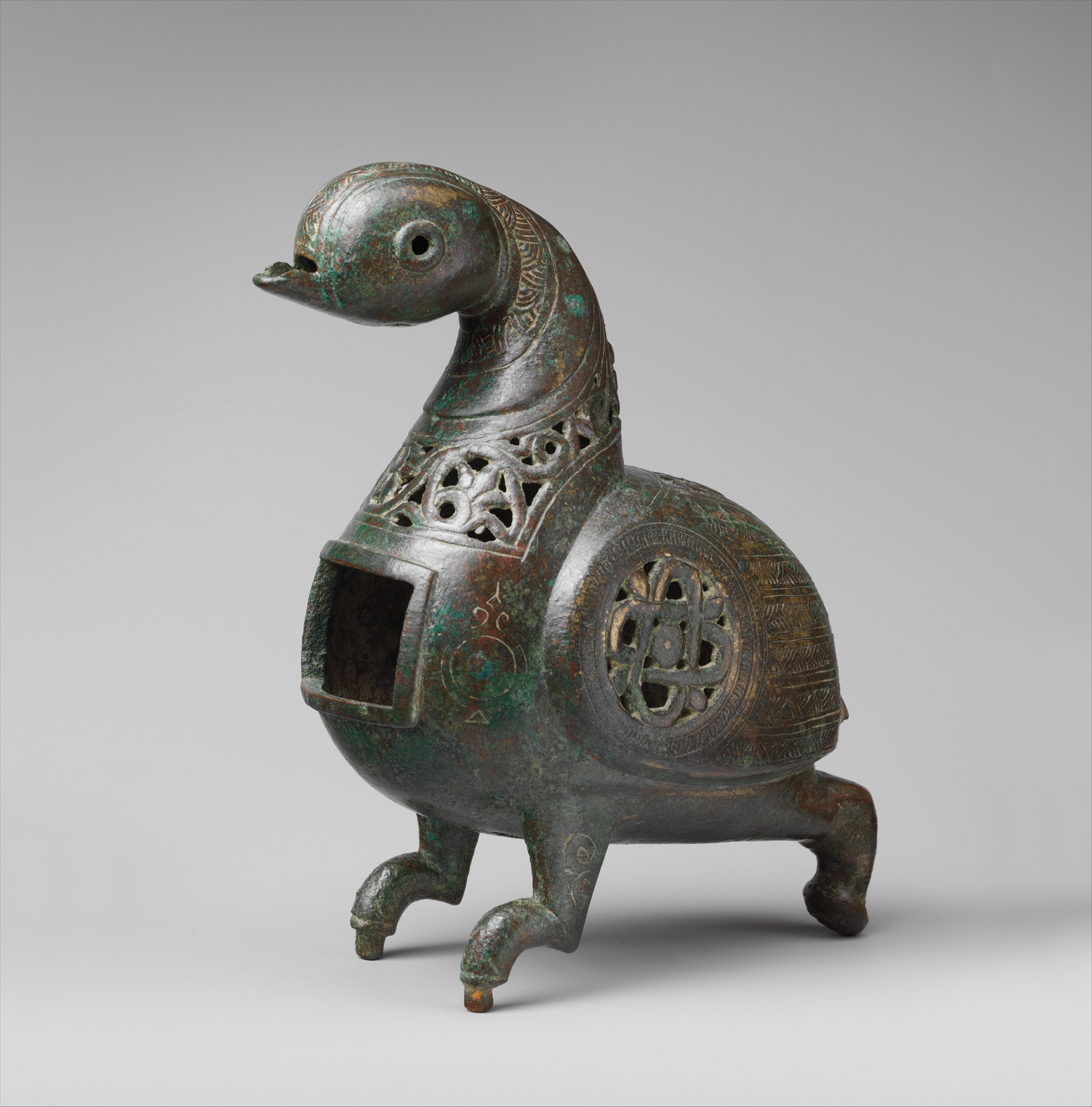
During the Seljuk period it seems people started taking more creative liberty with their incense burners, as can be seen with the incense burners below:

The Ottoman Period
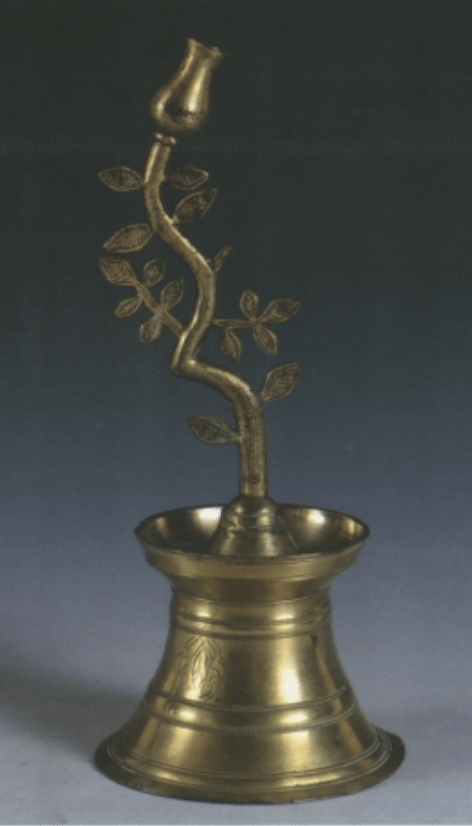
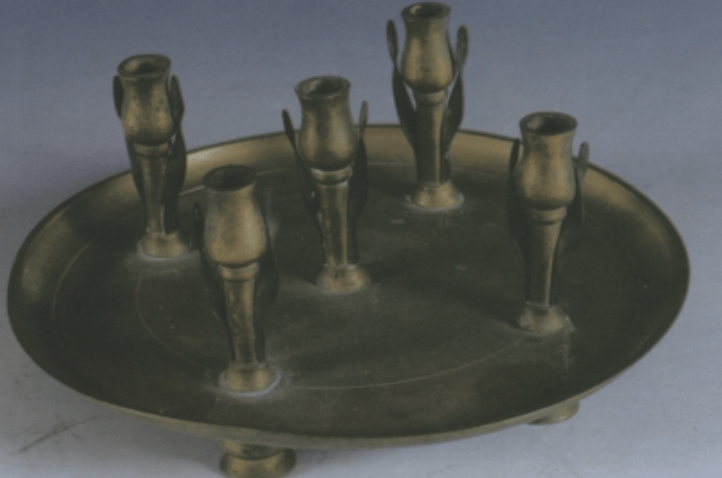
The Ottomans seemed to have use incense even more extensively than their predecessors. This can be proved by many things, including the creation of a new occupation called the Buhurcu. The Buhcuru was the person in the mosques and the mausoleums who was solely responsible for keeping up with the incense burners and making sure they were functioning properly. The Buhcuru was very important in maintaining the holy atmosphere of the mosque by associating prayer and worship with pleasant smells. Furthermore, as mentioned before, nice smells were commonly associated with the afterlife and the souls of the believers. So, that is why it was important for the Buhcuru to maintain the incense burners in the mausoleums. Commonly, Ottoman incense burners were in the shape of tulips, which can be seen below:
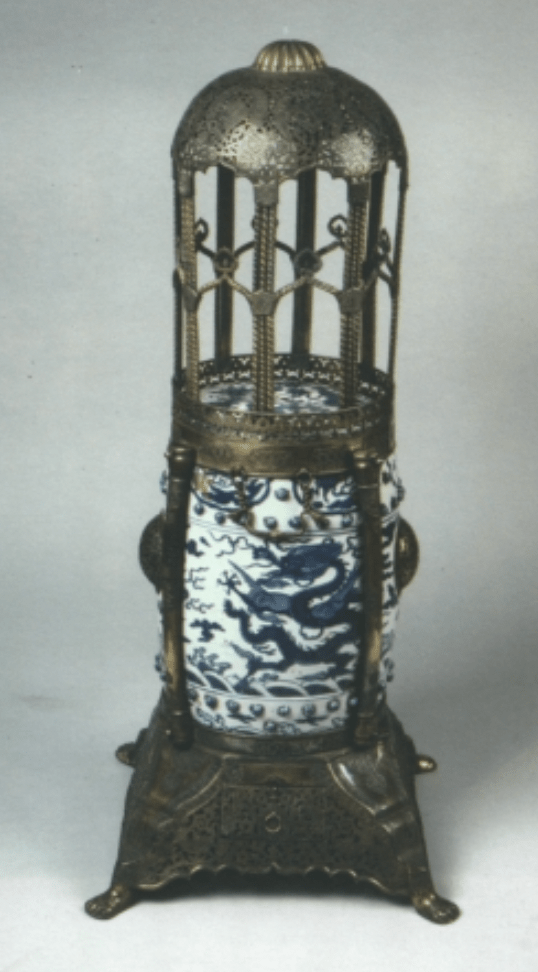
A unique example of an Ottoman incense burner would be the one found in the mausoleum of Ahmed I, shown below. It is very large and made of porcelain with dragons illustrated on it.
Sources
Ergin, Nina. “The Fragrance of the Divine: Ottoman Incense Burners and Their Context.” The Art Bulletin 96, no. 1 (March 2014): 70-97. https://www.jstor.org/stable/43947707.
Hendrick, Tera Lee, and Nina Ergin. “A Shared Culture of Heavenly Fragrance: A Comparison of Late Byzantine and Ottoman Incense Burners and Censing Practices in Religious Contexts.” Dumbarton Oaks Papers 69 (2015): 331-54.
“Incense Burner.” MetMuseum. https://www.metmuseum.org/art/collection/search/452378.
Incense Burner. Photograph. MetMuseum. https://www.metmuseum.org/art/collection/search/452378.
“Incense Burner of Amir Saif al-Dunya wa’l-Din ibn Muhammad al-Mawardi.” MetMuseum. https://www.metmuseum.org/art/collection/search/451042.
Incense Burner of Amir Saif al-Dunya wa’l-Din ibn Muhammad al-Mawardi. Photograph. MetMuseum. https://www.metmuseum.org/art/collection/search/451042.
King, Anya. “The Importance of Imported Aromatics in Arabic Culture: Illustrations from Pre‐Islamic and Early Islamic Poetry.” Journal of Near Eastern Studies 67, no. 3 (July 2008). https://www.jstor.org/stable/10.1086/591746.
La Maguer, Sterenn. “The Incense Trade During the Islamic Period.” Proceedings of the Seminar for Arabian Studies 45 (July 2014): 175-83. https://www.jstor.org/stable/43783631.
Le Maguer, Sterenn. “Typology of incense-burners of the Islamic period.” Proceedings of the Seminar for Arabian Studies 41 (July 2010): 173-85. https://www.jstor.org/stable/41622131.
 Objects of the Ottoman Empire