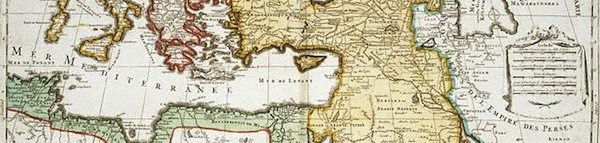
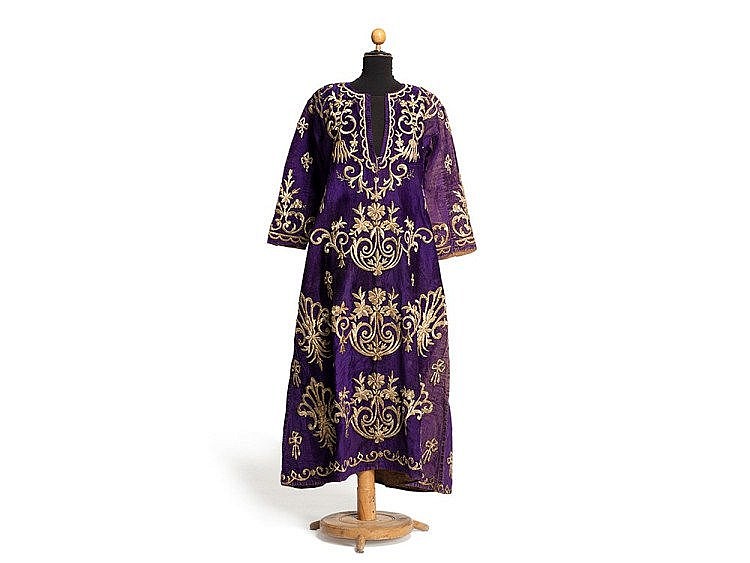
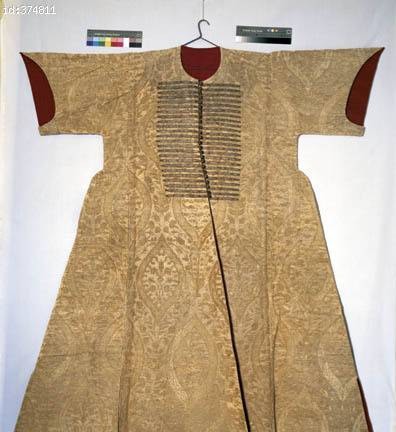
A Kaftan is “a long coat like oriental garment with long sleeves covering the hands, “worn by both sexes”. They were worn by all classes of people and held in very high regard within the Ottoman Empire. They were not seen as simply an article of clothing, but as a symbol of power and politics and a form of art.
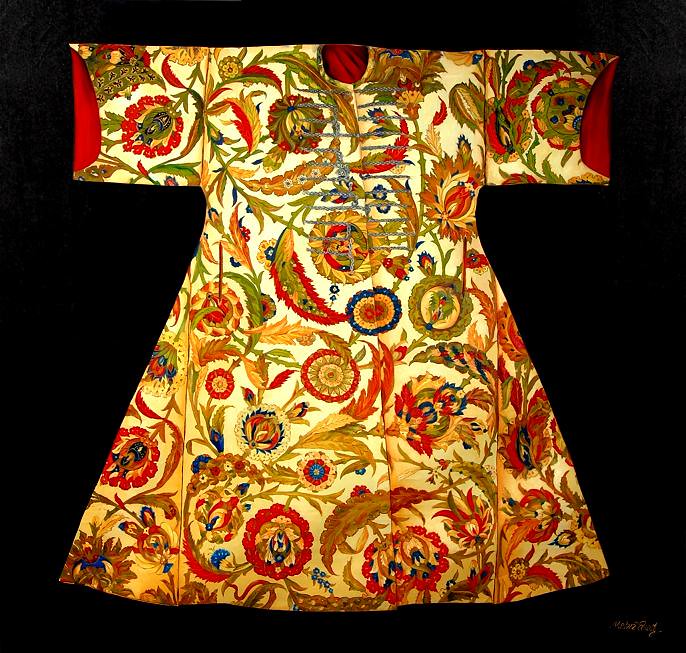
The Sultan’s employed imperial kaftan makers to ensure they were made to the highest quality. (3) However, there were also countless independent makers throughout the empire. The quality of the kaftans was never in question because the quality was strictly controlled by the state. The importance placed on the quality of the fabrics was also evident, as more time was spent in the creation of the fabrics, then the kaftans themselves. It was commonly believed that without beautiful fabrics, a beautiful kaftan could not have been created.
The Ottomans elites also used the kaftan as a way to express their feelings toward the sultan. If they believed he was doing a good job, they would present him with a kaftan of high quality. However, if they became upset with him, they would gift him one, of the lowest quality. This would have been seen as an insult, by the sultan, as well as a sign that he needed to perform more actions the people agreed with. This was a common practice by the elites, because using their words could have gotten them in to trouble. However, through this process the sultan was not angered, but encouraged to improve himself. The importance of the kaftan made this an extreme insult to the sultan, thus he felt as if he could not punish those that presented him a poor quality kaftan.
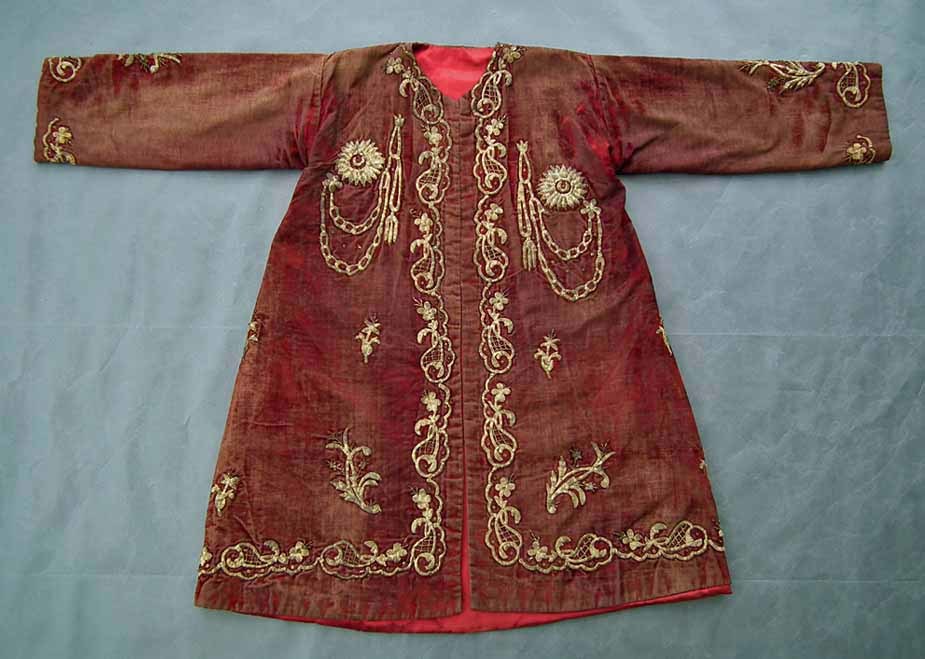
As stated, the fabrics were the most important aspect of kaftans, for the Ottomans. So much so, that the designs on these fabrics were not seen as an important at all, in terms of quality and worth of the kaftan. The importance placed on fabrics led to three specific ones being prioritized.
- Qotny: a fabric made from silk and cotton, constructed from “long-float weaves to achieve a smooth and lustrous surfaces” (2)
- Alaga: a “heavy Indian taffeta with a striped effect or floral motif” (2)
- Velvet: originally produced in Ottoman lands, eventually they began to use opulent Italian velvet. (3)
Qotny and Alaga were the most prominent fabrics that were produced for the kaftans. Days were spent to make sure that these fabrics were at there highest quality. Fabric makers worked along side the kaftan makers, both in a individual and imperial capacity. These artisans were highly skilled in one thing, the weaving of materials. Their lives were spent collecting the raw materials to create these fabrics, along with actually creating them. This was not a skill that anyone, within the empire, could have done to the same effect. These fabrics, and subsequently the kaftans, could only be produced to the quality they were, by these skilled makers. This made them held in high esteem, throughout the empire.
The Ottomans obtained Italian velvet through trade with the Europeans, which gave them access to further trade in the future. This trade also gave the Europeans access to the Ottomans vast collection of fabrics, allowing them to see what the Ottomans had to offer in terms of textiles. Even though the Italian velvet’s were held in high regard, by the Ottomans, they still favored traditional Ottoman fabrics and woven patterns. So much so, that the imported fabrics were made to resemble the Ottoman ones as closely as possible.
Overall, the kaftan was an important aspect of Ottoman society because it was used as a symbol of their power and politics, as well as allowing them to show off their textile prowess on their person. It was worn throughout society becoming an everyday outfit for most people. It became a staple of the Ottomans and as time went on other Islamic groups.
Sources
- Baker. “Textile Patterns on Royal Ottoman Kaftans .” Textile Patterns on Royal Ottoman Kaftans, 1996, 31-44.
- el Homossani. “The Original Fabrics of Kaftan.” ARS Textrina 1 (1983): 263-287
- Mackie, Louise. “Ottoman Kaftans with an Italian Identity.” Ottoman Kaftans with an Italian Identity, 2004, 219-229.
- Moosazadeh , R. “Application of Kaftan Cloths from Ottoman Military Period to Nowadays World .” World Academy of Science, Engineering and Technology International Journal of Humanities and Social Sciences 13, no. 2 (2019): 202–207.
- Tezcan, Hulya. “Costumes and Textiles.” Arts of Asia 31, no. 6 (2001): 68–76.
- http://www.istanbulnet.com.tr, IstanbulNet @. “Explore Turkey Pictures for Topkapi Palace :: Textiles and Kaftans.” Explore Turkey :: Topkapi Palace :: Textiles and Kaftans. IstanbulNet. Accessed October 19, 2019. https://www.exploreturkey.com/exptur.php?id=287.
 Objects of the Ottoman Empire