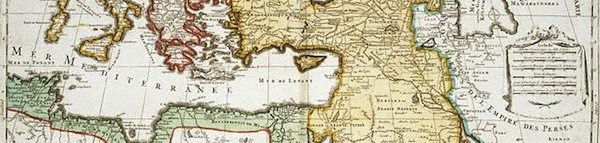
This website is part of a project that has been completed by Dr. Betül Başaran’s Islamic Empires: Podcasting the Ottomans, (RELG314, HIST314) class for the 2019 Fall semester at St. Mary’s College of Maryland. Our class was modeled after a similar class at Boston College taught by Dr. Dana Sajdi which culminated in the project Stories Ottoman Objects Tell and this website includes abridged versions of our research projects on various objects found in the Ottoman Empire. We used the Ottoman History Podcast in lieu of a traditional textbook to prepare for each class along with other reading materials. This format allowed us to engage in the course material differently because we were able to hear about the exciting research on objects and life in the Ottoman Empire directly from the scholars conducting it.
Our Fall 2019 class was very small, comprised of just five students, making for intimate and robust discussions. Each individual comes from differing backgrounds and majors and each one has a different reason as to why they chose the objects they did. Nathan, Aidan, and Meghan are all third-year students at St. Mary’s. Nathan is an English major with Religious Studies and Women, Gender, & Sexuality Studies minors. Aidan is a History major and Anthropology minor and Meghan is majoring in Religious Studies and Political Science with a Women, Gender, & Sexuality Studies minor. Zee and Jason are currently in their second year. Zee is a Psychology major and Neuroscience minor and Jason is a Theater major with minors in film and dance. Our different interests, backgrounds, and career aspirations helped to aid and enhance our class discussions because we were all able to bring something different to the table. This allowed for a diverse set of objects to explore and draw conclusions from.

Nathan Poole chose Ottoman Kaftans as his area of research because of the importance they still have within Islamic societies. After noticing, during a trip to Morocco in the summer of 2019, the importance that the Moroccan Muslims placed on the kaftan, he became interested in discovering the importance they played for the Ottomans. Nathan found it quite profound that an article of clothing could carry that much weight for one group of people, in this case, the Muslims. He was curious to discover how they were crafted in the time of the Ottomans, who did not have access to the advanced technology of the 21st century, which make the process exponentially easier.
Aidan Young chose to research the Hagia Sophia because of the rich history surrounding the church and the interesting ways that it was used for legitimacy from both the Byzantine and Ottoman Empires. He believes that studying the Hagia Sophia is a good way to show the new imperial image that the Ottomans adopted and that the church provided a great deal of legitimacy for the Ottomans. This project allowed Aidan to explore the shifting city of Istanbul and the changes made by Ottoman sultans. He is planning to go in person to Istanbul over the summer to see these changes with his own eyes.

Meghan Pushee chose to research Textiles in the Ottoman Empire because she was interested in learning more about Women in the Ottoman Empire through an everyday object/resource. Meghan was initially curious about the role of textiles in Ottoman society because spinning and fiber art is one of her hobbies and because textiles are a necessity of everyday life that we seem to take great advantage of. Through her research, Meghan was able to learn a great deal about women in and outside of the Ottoman Empire and some of the opportunities they had to develop their own autonomy through textiles.

Zee Malamud has always been interested in history and religion. Their Jewish upbringing made them aware of Jerusalem, and the importance around the city has always been a sort of fascination for them. The Dome of the Rock and its history has always been in the back of their mind due to the fact that it is the biggest feature in the skyline of the city. This project enabled them to research and study the history, religion, and physical design around the building and area in detail. Despite the religious and political unrest, they one day hope to explore the Dome of the Rock in person.
Jason Williams had chosen to do research on Shadow Puppetry in the Ottoman Empire, as it both is related to his major and actually had an important example of synthesis when it comes to Ottoman relations with foreign powers. This type of theatre interested him because he had quite an interest in puppetry. He hopes that studying the theatrical form and patterns of this form of theatre may bring along the idea of the effect that shadow puppetry had on the citizens of the Ottoman Empire.
This website is a culmination of the research that this class has done throughout the semester. Each student has worked hard to research and draw conclusions in order to formulate an argument for their individual papers. Many of these projects represent major ideas covered throughout the class and explore a separate aspect of Ottoman life and culture. These projects delve into the Ottoman imperial image, Ottoman society and the fluid borders between foreign powers. We hope you enjoy learning about our objects, and we would like to thank Dr. B for a great semester!
Nathan, Aiden, Meghan, Zee & Jason
 Objects of the Ottoman Empire